

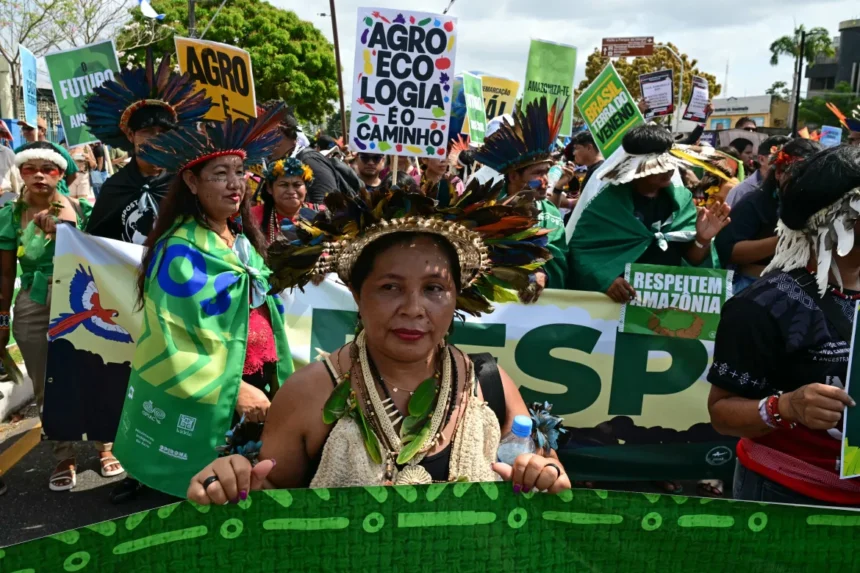
By Correspondent
Developing countries managed to acquire more financial support for programs aimed at shifting away from the use of fossil fuels.
The resolution will result in a tripling of the financial support from rich countries.
The funds are meant to help developing states adapt to the impacts of the climate crisis.
According to reports developed countries pledge to provide $120bn a year for adaptation.
This is part of the $300bn developed countries pledged to them in 2024.
However the new deadline is now 2035, instead of the 2030 deadline they were demanding.
Former Germany climate envoy Jennifer Morgan was quoted by the media praising the resolution.
“While far from what’s needed, the outcome in Belém is meaningful progress.
“The Paris agreement is working, the transition away from fossil fuels agreed in Dubai [at the Cop28 talks in 2023] is accelerating.
“(This is) despite the efforts of major oil-producing states to slow down the green transition.
“Multilateralism continues to support the interests of the whole world in tackling the climate crisis.
”However, experts feels that efforts to limit global heating to 1.5C above preindustrial levels, in line with the goals of the Paris agreement were not addressed robustly enough.
Though addressed in the final text the position adopted isn’t firm enough as developing countries, suffering the worst effects, had hoped for.
Before the event countries were supposed to present new national plans on cutting emissions.
However, they fell short of the commitments needed to maintain the 1.5C limit.
That limit has already been breached.