
By Correspondent
Hurungwe RDC CEO, Luke Kalavina was convicted of fraud involving US$47 000 in July and sentenced to 34 years.
In a statement by the Zimbabwe Anti-Corruption Commission (ZACC) Kalavina was found guilty of defrauding the council of public funds.
The money was meant for critical infrastructure projects which included a bridge and the upgrading of a clinic in Karoi.
Council Engineer Romeo Mupamaonde, his assistant Alfred Makama and a contractor Batsirayi Nyamayaro were also sentenced to an effective 15 years over the same case.
The shocking sentence for Kalavina was hailed by many anti-corruption watchdogs as fitting and a statement enough.
The Anti-Corruption Trust of Southern Africa (ACT-SA) saying it would send a strong warning to others.
“The sentences for the Hurungwe RDC officials serve as a strong deterrent against corruptiom.
“It sends a clear warning to all those engaged in corrupt practices that, if caught, they will face the full consequences of their actions.
“Public goods should never be misused by any individual.
“In our view, the punishment is well deserved, a welcome removal from society,” it said.
The Chimombe-Mpofu Contradiction
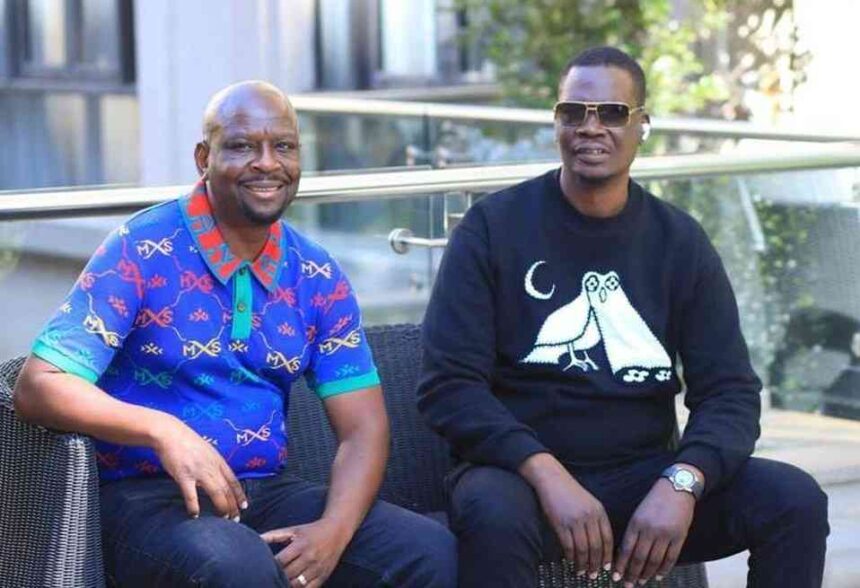
Be that as it may this week’s sentences for Mike Chimombe and Moses Mpofu in a case centred around not US$47 000 but over US$7 million have produced a contradiction.
The two were found guilty of orchestrating a fraud that prejudiced the Government of US$7.3 million in a tender to supply goats.
Justice Pisirayi Kwenda sentenced Mpofu to 22 years from which 8 years were suspended on condition of good behaviour.
Four more years will be suspended if he manages to restitute the stolen money.
It leaves him to serve an effective 15 years.
Chimombe received 17 years, with five suspended on similar conditions, giving him 12 years effective.
He will have to restitute US$964 000 which the court directed should be paid by February 26, 2026.
In his judgement Kwenda stated that the scheme deprived, “the poorest of the poor” making the crime particularly grave.
He noted that the potential loss, about US$26 million, including the full value of the contract, demonstrated the seriousness of the offence.
Kwenda said that “the potential prejudice was high and the actual was also high”.
He added that, “there must be a shift towards imposing deterring sentences in cases of this nature”.
The Different Similarities
What is strikingly similar in both cases is how the convicted individuals, Kalavina, Mpofu and Chimombe abused public resources.
Furthermore in both cases the judges were insistent on sentences that would deter potential offenders.
However, contrasted against each other its strikingly clear that if Kalavina got a deterrence sentence over US$47 000 then the Goat-Duo got a lenient sentence.
None of the money that Chimombe and Mpofu squandered has been recovered.
This means for fleecing the public of much more money they have received an even lesser sentence than Kalavina.
It’s a delicate situation considering the wider context which has the imposing figure of Wicknel Chivayo.
Chivayo, who the duo clashed with over money from other deals, warned that they needed to get a lesson.
He even predicted that they would get not less than 20 years in jail.
Having received a less sentence does this mean more hands are at play in this story since it doesn’t fit the proper structure for similar crimes?
In a normal situation and in alignment with cases like Kalavina’s the duo were supposed to get even heftier sentences.
They have received way less and promised to appeal both sentence and conviction.
While for now it appears far-fetched it won’t be a surprise that one day soon the two tenderpreneurs who couldn’t eat quietly will walk out.
A higher Court will find extenuating circumstances, mitigating reasons and an even daftier sentence imposed.