

By Fanuel James
Harare’s proposed US$818.3 million budget for 2027 is impressive in scale but undermined by a stubborn financial reality: the city collects barely enough to fund its ambitions.
Presenting the budget last Thursday, Finance and Development Committee chairperson Councillor Jubilation Shoko disclosed that collection efficiency stood at 58 percent as at September 30, 2026.
He described it as “a level that is inadequate to meet its operational and service delivery requirements.
That admission should frame the entire budget debate.
Council projects US$599.5 million in internally generated revenue against expenditure of US$818.3 million.
At 58 percent collection efficiency, the headline figure risks becoming an exercise in fiscal optimism rather than a credible service-delivery plan.
Water Takes The Money But No Results
Water, Sanitation and Hygiene (WASH) takes the largest allocation at US$369.5 million, or 45.16 percent.
Yet Harare has prioritised water for years without resolving the chronic failures that leave residents without reliable supplies.
WASH accounted for 43 percent of the 2022 budget, received US$216 million in 2024 amid a cholera outbreak and was allocated US$195.6 million in 2025.
The proposed 2027 allocation is substantially higher, but the question remains whether the money will translate into functioning infrastructure and reliable services.
The contradiction is glaring: US$369.5 million for water and sanitation, but just US$1.89 million for natural resources conservation, despite the importance of protecting wetlands and other ecosystems that sustain water supplies.
Bigger Allocations, Same Structural Problems
The problem is not simply how much Harare budgets, but how much it collects and actually spends on development.
If revenue collection remains weak and capital projects continue to suffer poor implementation, larger allocations will not necessarily produce better services.
Harare cannot budget its way out of a revenue-collection crisis.
It must improve billing and collections, protect service-delivery funds and curb the recurrent expenditure that crowds out infrastructure investment.
Until then, US$818.3 million is less a measure of the city’s financial strength than a statement of its ambitions.
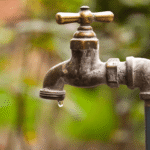
Residents need water flowing from their taps, not ever-larger figures in budget documents.
——————————————————————————————————-
Love what we do?
We’re dedicated to opening up democracy, one article, video and story at a time. If you find our reporting helpful, you can support the Magamba Network team by buying us a coffee. It’s quick, easy, and makes a real difference!
——————————————————————————————————