
BY REPORTER
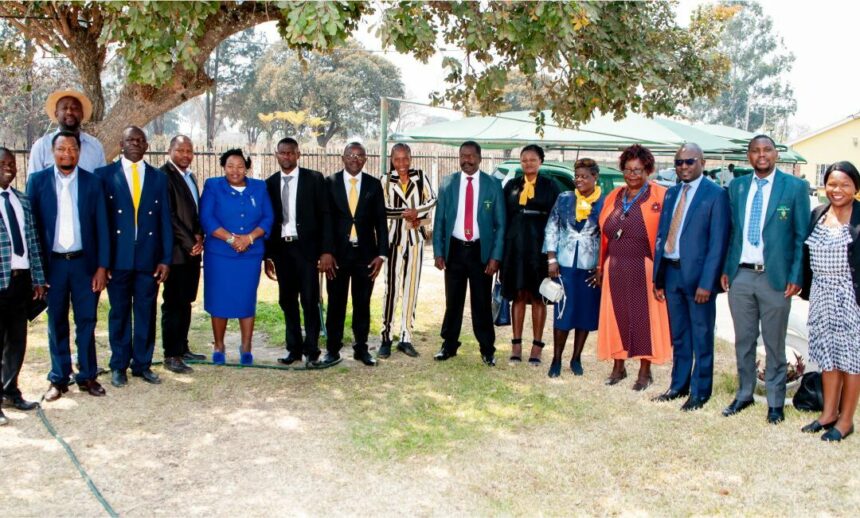
Ruwa Local Board councillors and senior managers on Monday signed performance contracts in a move aimed at improving service delivery and strengthening accountability.
The development could mark a significant turning point in the towns governance trajectory, particularly at a time when local authorities across the country are under intense scrutiny for failing to deliver basic services.
While the signing of performance contracts is not new within Zimbabwes local government system, with mayors and council chairpersons annually signing such agreements before the Minister of Local Government, Ruwa’s initiative comes against a backdrop of mounting public frustration.
Across many councils nationwide, residents have raised concerns over erratic water supplies, refuse collection challenges, deteriorating roads and a lack of transparency.
Speaking at the signing ceremony, Ruwa Local Board Mayor, Councillor Michael Mataruka, underscored both the symbolic and practical significance of the move.
These contracts are not just documents.
“They are promises, promises to deliver, promises to improve, and promises to place the people of Ruwa at the centre of everything we do, said Mataruka.
His remarks reflect a growing recognition within local government structures that restoring public confidence requires more than rhetoric.
In theory, performance contracts introduce a results-based management culture, where elected officials and senior administrators are evaluated against agreed targets within a defined timeframe.
Rising Expectations in a Growing Town
For residents of Ruwa, expectations are understandably high.
As a fast-expanding dormitory town of Harare, Ruwa continues to experience population growth that places increasing pressure on services such as water, sewer, refuse collection and road infrastructure among others.
Historically, the absence of clear accountability mechanisms has allowed inefficiencies to persist without consequence.
The signing of performance contracts potentially alters that equation by creating measurable standards that could expose incompetence and reward efficiency.
If properly implemented, the contracts can also clarify roles between councillors, who are responsible for policy oversight, and senior managers, who execute council operations.
This distinction is crucial.
Many local authorities have struggled with blurred lines of authority.
This results in political interference in administration or, conversely, bureaucratic inertia shielded from political scrutiny.
Performance contracts could therefore serve as a governance bridge, aligning political leadership with administrative execution under shared and measurable goals.
Transparency Will Be Key
However, for the initiative to carry real weight, transparency will be essential.
Ruwa Council will need to make the agreed targets and timelines publicly available so residents can hold officials to account.
Without public access to these benchmarks, the exercise risks becoming symbolic rather than transformative.
Equally important is the establishment of regular public reporting mechanisms.
Quarterly performance updates, community feedback forums and accessible scorecards would help foster a participatory approach to service delivery.
Such platforms allow residents to assess councillors performance and provide constructive feedback, ultimately strengthening the local authoritys overall effectiveness.
A Benchmark for Accountability
Whether this bold step will translate into tangible improved service delivery and accountability remains to be seen.
However, as it stands, it is a good benchmark against which Ruwa residents can measure their elected officials.
If implemented with sincerity, the performance contracts could be more than a piece of paper but a foundation for renewed social contract between the council and the community it serves.